

The waters of Portland Harbour are home to a diverse and important range of species and habitats.
The shallow sheltered muddy seabed of the harbour, protected by the mass of the mainland to the north, Chesil Bank and the Isle of Portland to the west, and the impressive breakwaters to the south and east provide home to Sea pens and other burrowing animals, a habitat more typically found in much deeper Scottish sea lochs.
The shallow sandy sediments in the west are known to be home to the protected ‘Three Eyed Worm’ – in the UK, the Armandia cirrhosa is found only in within Portland Harbour and the Fleet Lagoon in the UK.
Seagrass meadows are found in the north of the harbour. These important habitats provide a range of environmental benefits from storing carbon, to acting as nurseries for young fish and important breeding habitat for seahorses.
The breakwaters provide a unique environment for seabirds, and host important breeding colonies for both the Herring Gull and Greater Blackbacked Gull, which are red and amber listed respectively in the UK. For over a decade Portland Harbour Authority has worked with groups of volunteer bird ringers from the British Trust for Ornithology to ring the latest generation of gulls. These rings allow bird watchers to identify the place the birds were ringed and the year of their birth. Sightings can then be reported to a central database. Reports have shown birds from Portland breakwaters venturing as far as the Bay of Biscay and have also revealed new insight into breeding bird behaviour.
The Harbour also joins directly to The Fleet Lagoon, one of the largest tidal lagoons in the UK.
Much of the Port estate is designated a Site of Special Scientific Interest.
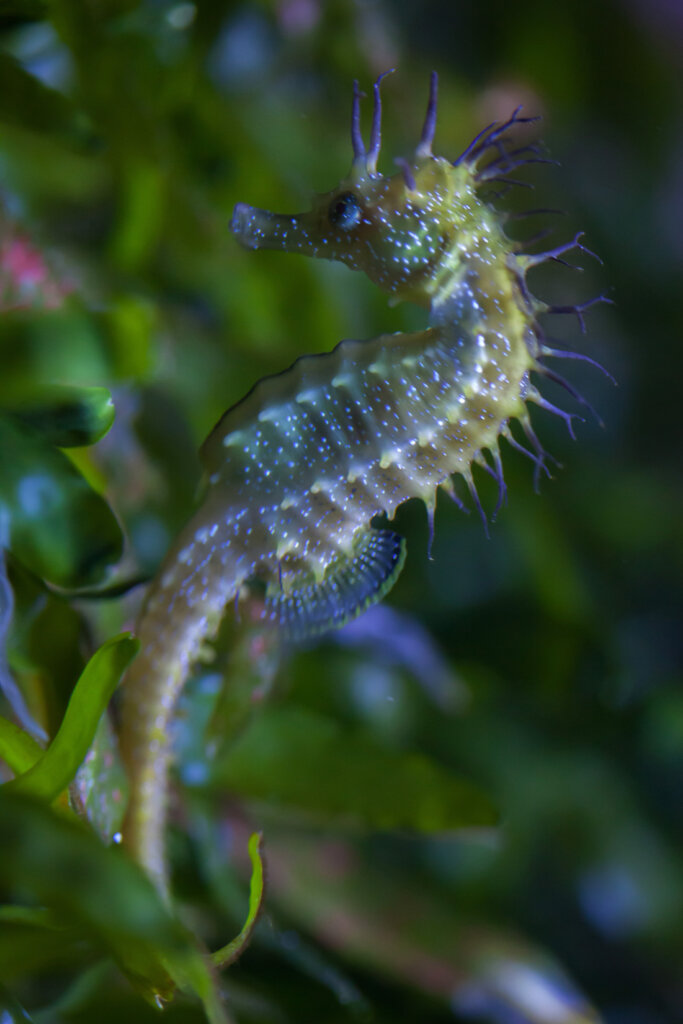
Scientific name:
Hippocampus guttulatus