
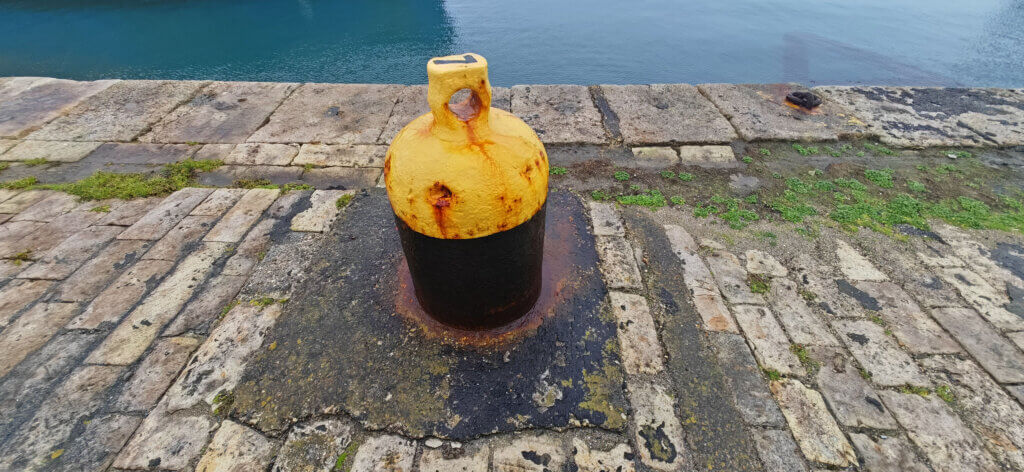
A Victorian cannon used as a bollard to moor ships at Portland Port has been given a new lease of life in the restoration of a historic site.
The mark III rifled, muzzle loading (RML) 64 pounder was built into the quayside during the construction of the inner harbour breakwater after being deemed obsolete by a visiting naval ship in the late 19th century.
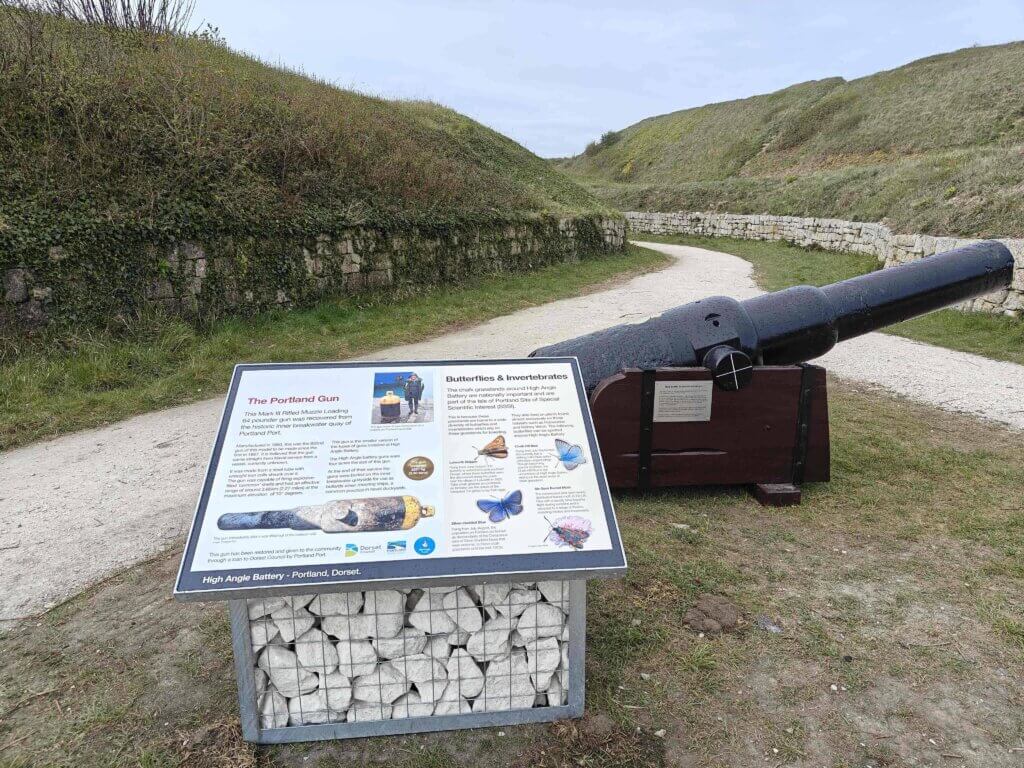
It was used for berthing vessels for more than a century before it was extracted, restored and placed on display at High Angle Battery on the top of Portland following a major project to revamp the former gun emplacement.
Known locally as the ‘ghost tunnels’, the battery near the Verne was built in the 1890s to defend Portland Harbour but fell into disrepair and was placed on Historic England’s Heritage at Risk register in 2022.
Portland Port chief executive Bill Reeves said: “Congratulations to all of those who have made the restoration of High Angle Battery such a success.
“As a local business with a rich military heritage on our own site, we were very pleased to play our part with the supply of our cannon as a showpiece for the project.
“It is fitting that it has found a new home in such a setting after so many years of service at the port and the former naval base.”
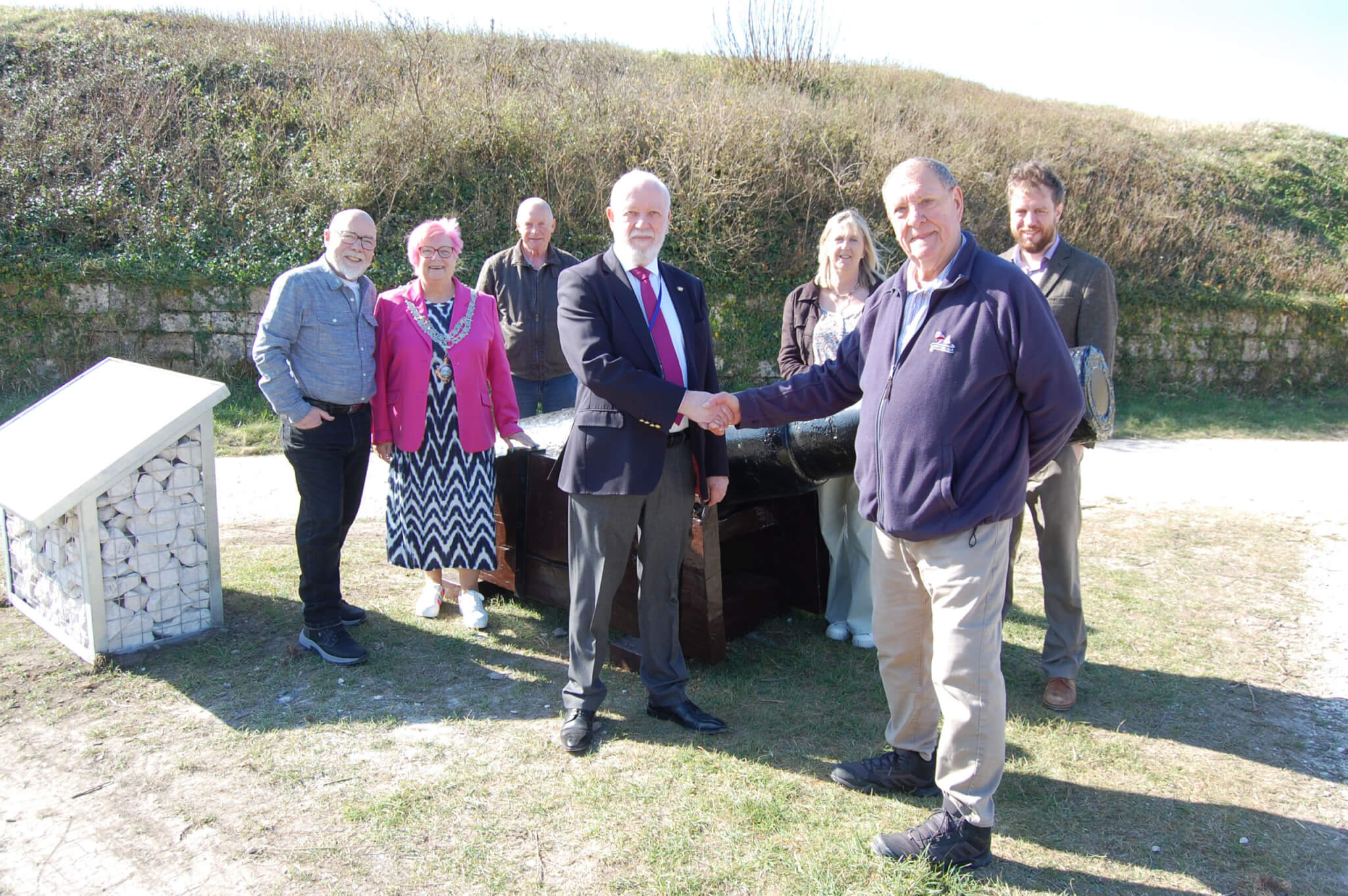
Portland Port chief executive Bill Reeves and planning and consents manager Frank Cox attended a ceremony with councillors to hand the cannon over. Sales manager Josh Payne attended the official opening of the restored High Angle Battery site with dignitaries and project supporters.
The port loaned the 145-year-old cannon to the community through Dorset Council, which led the restoration project with Portland Town Council, Island Community Action, local organisations and volunteers.
Weighing 3,251 kg, or 3.20 tons, it was made by Woolwich Arsenal in 1880 and was the 832nd mark III gun to be made since production began in 1867. It was capable of firing shells to a maximum range of 3.66km, about 2.27 miles.
Burying decommissioned cannons into quaysides for use as mooring bollards was common practice in naval dockyards for many years.
Following improvements to the port’s grade-II listed inner breakwater, which brought the berth back into back into commercial use, Portland Port decided to replace the cannon bollard, with a modern equivalent. Once removed it was restored by Mechanical Services Ltd before it was transported to High Angle Battery.
It is a smaller version of the types of guns installed at the battery, which were four times as big.
The Rediscovering High Angle Battery Project to revitalise the landmark was set up by Dorset Council with a grant of nearly £250,000 from the National Lottery Heritage Fund and additional funding from Portland Town Council, Castletown D-Day Centre and the Fine Family Foundation.
It has included new interpretation panels, improved access, increased biodiversity, structural repairs, vegetation clearance and litter removal.
The site, known as the ‘ghost tunnels’ for its network of underground passages, is set to become a valuable community asset with a variety of events, activities tours and school visits.
Portland Port supports a number of local charities and organisations. It also holds heritage tours of its historic buildings on its estate.